Open Data Analytics

Sometimes things are literally merging into each other – like right now when five seconds after reading Alex’ take on RedMonk’s introduction of a big data analytics game offering I am clicking through to Brian Lamb on the Zen of open data, citing Chris McDowall:

Open is better than closed.
Transparent is better than opaque.
Simple is better than complex.
Accessible is better than inaccessible.
Sharing is better than hoarding.
Linked is more useful than isolated.
Fine grained is preferable to aggregated.
(Although there are legitimate privacy and security limitations.)
Optimise for machine readability — they can translate for humans.
Barriers prevent worthwhile things from happening.
“Flawed, but out there” is a million times better than “perfect, but unattainable”.
Opening data up to thousands of eyes makes the data better.
Iterate in response to demand.
There is no one true feed for all eternity — people need to maintain this stuff.

Yep, sharing is better than hoarding. Reminds me that today at last I’ve got some time to write some posts in here. After all it’s Tuesday, not Monday.

Upcoming: HalloWelt Projekttag, BarCamp Stuttgart

Das Wochenende ist gut gefüllt – in wenigen Stunden mache ich mich auf den Weg zum BlueSpice Projekttag von HalloWelt in Regensburg. Zusammen mit anderen Wiki-Beratern, -Anwendern und -Evangelisten “Advocates” werden wir testen, diskutieren, Erfahrungen austauschen und Ideen entwickeln. Das wird interessant – das (Lösungs-)Portfolio im Enterprise Wiki Bereich erweitert sich bei vielen von uns. Sprich, wir alle haben mehr Lösungen im Angebot als (Enterprise-)Wikis. Insbesondere stehen Open Source (Enterprise 2.0 / Social Software)-Projekte neben dem Angebot kommerzieller Anbieter (von den Mischformen ganz zu schweigen, wo bspw. Open Source-Varianten von Bezahlsoftware angeboten werden). Für Anwender wie Berater sind das natürlich spannende Zeiten – mit Chancen wie Risiken – insofern freue ich mich sehr auf die Gespräche morgen.

Wie sehr ich mich freue? Zugunsten des BlueSpice Projekttages versäume ich den ersten Tag des BarCamp Stuttgarts, das eigentlich eine absolute Pflichtveranstaltung und ein Muss für mich ist. Und weil am Sonntag ein nicht-abzusagender-privater-Termin ansteht habe ich nun die Wahl entweder am Samstag abend spät – nach der Rückkehr aus Regensburg – oder am Sonntag morgen früh die BarCamp-Meute zu treffen. Nun komme mir aber keiner mit dem Vorschlag beides zu machen, das sind sich gegenseitig ausschließende Optionen …

Shipping up to places, this time: Boston

For most people I know travelling is a hassle best avoided. Not so for me. I am still pretty fond of it, even when it isn’t normally the most productive of times for me (which opens up the side question of why airports, train stations and most hotels don’t offer some free wifi as a complimentary service?). Some of the good things include:

- free newspapers on planes (and I do enjoy sifting through paper not screens at times) and if you’re kind you may even get a few free drinks
- depending on airline even the food is good on the planes (Iberia was pretty neat this time)
- on a 7 hour flight one can write some blog posts drafts – provided you’re able to take a capable laptop with you

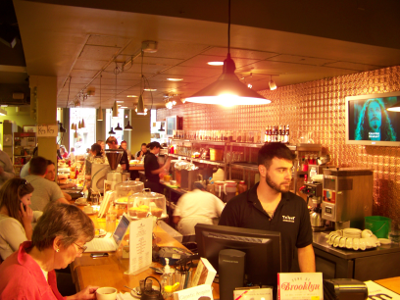
And travelling can provide you with some very welcome inspiration, perspective and (sometimes) outright mind-blowing stuff you learn when you look and observe closely (this guy caressing his Kindle on the airport in Madrid – and a total absence of iPads so far; getting a cold douche refresher on how different we Europeans are after all; how easy-going and nice-to-have the regular traveling American can be; how I enjoy the coffehouse-bookstore hybrid, pictured left is the Trident bookstorecafé).

So it’s fitting that travelling is a prerequisite to meeting most people from my Enterprise 2.0 consulting industry – for instance when I was at Lotusphere 2010 in January I’ve met Marcia Connor in person (after following her on the internets, esp. twitter for a while) – and we’ll meet each other again, when I was in London for the Social Business Summit meeting people alone rendered my trip worthwhile. It’s an easy formula: No travel – no meeting my worldwide peergroup. And hanging out together on the internet has some obvious time-zone downsides you only avoid by travelling.

So it’s a good idea to make the trip cross the pond at times to meet these people that don’t come to Europe regularly. Valid for the US share of Enterprise 2.0 people (practitioners and vendors both don’t care so much for travelling to Europe in E2.0 business, for the latter ones this is a bit strange. With consultants and thought-leaders it’s a totally different story).

And this time it’s the Enterprise 2.0 conference, starting here in Boston on Monday. For this I’ve got a lot of mails and contact requests by vendors in the last days. Sorry guys, I haven’t reacted that much, one reason is that I don’t know yet what my schedule will look like (I am registered as press and sometimes press they’ve got some press appointments, treats or who knows – I would bet on it being here similar), the other reason being that I planned to browse around the exhibition venue on my own terms, check out what’s interesting and seek more information when necessary. So I may turn out to be not a totally lost contact, OK?

OK, my timetable for Monday to Thursday is filling with sessions and things to see and do quickly (starting with Dion Hinchcliffe early Monday morning), some peer-group socializing, tweet-ups and odd small-talk in the halls. I am probably waving a bit, too. Don’t hesitate to get in touch with me and the others there or in real life – I traveled a long distance for exactly this ;)

Interview zu Enterprise 2.0 Beratungsmethoden und -praktiken

Das zweite Interview der Woche fokussierte auf Enterprise 2.0 Beratung – ich notiere hier erst einmal die Fragen die mir Michael Dekner aus Wien in einem Skype-Interview gestellt hat. Meine Antworten waren zwar recht ausführlich, können aber natürlich nicht einfach so hereinkopiert werden. Da ich aber ohnehin einen Blogpost zur Thematik plane, kommen hier schon einmal die Grundzüge des Interviews:

- Beratungsleistungen von frogpond?

- (übliche) Vorgehensmodelle in Enterprise 2.0 (Beratungs-)projekten?

- (übliche) Methoden in den jeweiligen Projektphasen?

- Methoden mit denen bspw. Akzeptanzbarrieren angegangen werden können – und welche Barrieren treten typischerweise auf?

- frogpond-Empfehlungen zur Überwindung dieser Barrieren?

Unternehmen und das Social Web – Spielerei, Pflichtübung oder Gelegenheit zum Punkten?

Nach der CeBIT und allen damit verbundenen Aufgaben, Terminen und der üblichen Rennerei ist es Zeit inne zu halten und ein, zwei Sachen zu posten, die bereits zu lange warten. Das erste ist das Slideset zu einem Workshop beim VDMA in Frankfurt, den ich gestalten durfte (es gilt das gesprochene Wort, die Folien können unter CC-by Attribution-No Commercial-Use bei Slideshare heruntergeladen werden, sie werden auf Wunsch der Teilnehmer hier zur Verfügung gestellt). Vielen Dank an Herrn Gottwald vom VDMA für die Einladung und an alle Mitdiskutierer.

Die Diskussion war lebhaft, interessant und sehr konkret – die Folien dienten mehr als Anknüpfungs- und Ausgangspunkt für eine branchenspezifische Vertiefung:

Upcoming: 2010 conferences calendar (and what are they good for)


Yes, the social web continues to change this consultant’s and analyst’s work – it’s changing the ways we think, interact and work. Yikes, one could say that the plethora of networked information and virtual network opportunities should be enough for everybody, but I don’t care for information overload fears and shivers.

Thus information-(over)loaded conferences are fine for me (that is if they provide some inspiration, they’re always wonderful and productive interruptions …), but besides these and some other reasons of going there as a freelancer, it’s basically about the opportunity for meeting old friends and real networking. They are chances to have the real personal conversations that deepen networks. And that’s why here’s my preliminary schedule for 2010:

First and right around the corner is Lotussphere, next week in Orlando. I am basically sitting on packed suitcases, but the whole event has it’s own tag here already and will trigger a lot of posting for sure. More coming up later on …

Did I say real conversations need face-to-face contact? I need to reframe this, otherwise my participation in the Virtual Enterprise 2.0 Conference on February 2, 2010 won’t fit, huh? I expect this to be equally good as my virtual participation in last year’s E2Conf in San Francisco (much of it is buried inside tweets and bookmarks, alas).

Now, it’s so much easier to participate in such an event than actually getting there, that’s why I am hesitating to register for Lift Austria in March. But the topic “Enable!” is as tempting as Vienna in spring …

Mechanistic models and a deterministic worldview may have worked well for the last centuries, but are not apt for the upcoming challenges we are facing today. Rather, we need completely different concepts and attitudes, accepting that the underlying processes escape our control and are unpredictable. It seems that the concept of “Enabling” is the key to this shift of thinking. Enabling is the art of carefully configuring adequate levers (physical space, networks, resources, etc.) that best support specific innovation processes, such as idea generation, prototyping, market entry, etc.

OK, then, on with already booked events – starting with re:publica April 14-16 in Berlin – Germany’s blog, social media and digital society main event. Then CeBIT & WikiCAMP in March, the german LinuxTag 2010 in Berlin (will see if I can make it there, June 9-12) – because it may collide with my travel plans for the 2010 E2Conf in Boston, June 14-17. Later this year I will try to return to Copenhagen for another reboot

Add to this several BarCamps – including the Barcamp Nürnberg (February), Barcamp Furtwangen (May), BarCamp Bodensee (June) and possibly BarCamp Ruhr too (may collide with Lift Austria, sigh).

Oh, and right – I need to get some work done in between as well ;)

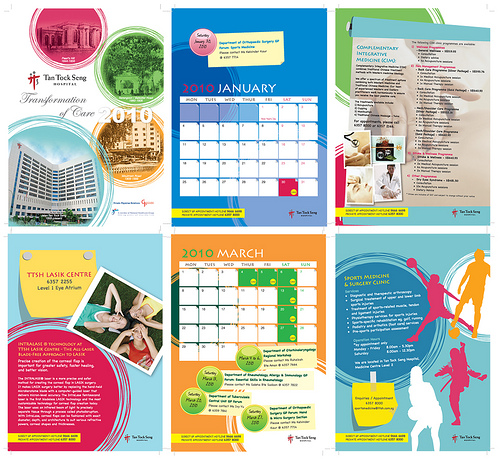
Above picture of cute calendar work http://www.flickr.com/photos/booberrystudio/ / CC BY 2.0

Oliver Marks and Andrew McAfee at the Enterprise 2.0 conference

During the last two days I have spent the better part of my nights listening in to and participating in the discussion at the Enterprise 2.0 conference in San Francisco. This wasn’t only Twitter, quite some documenting took place in Google Wave too (that’s global collaboration, me and Dan editing the same blip while being literally thousands of miles away from each other, for #nirvana we only need to sort out the time zone problems). Some notes and thoughts are still forming and may end up in a frogpond- or enterprise2open-blog post soon …

Until then this video is a good thing to watch, Oliver Marks (who happens also to be one of the headliners at next week’s E20SUMMIT) talking with Andrew McAfee (new book here: Enterprise 2.0: New Collaborative Tools for Your Organization’s Toughest Challenges) about the conference, it’s target audience and about the current state of the discussion around Enterprise 2.0.

We discuss the strengths of the event – the evangelists and middle ranking employee success stories – but also note the need for impressing on senior ‘C’ suite decision makers in organizations the business value of these modern ideas and associated technologies.

There are at least two interesting things to notice in there, one: the discussion is evolving quickly and the experts have since long stopped to mull over questions of definition, why even of questioning RoI. The real topics are now the necessary steps we all should take to get the C-Suite from “being interested” to becoming active sponsors – and how to explain the tangible benefits of collaborative performance. Systems are ready and able, experienced consultants ditto and may work for the satisfaction of being the change you want to see money. Gentlemen, please let your projects start.

The other thing is the obervation I absolutely second that middle-level people aren’t the roadblock, in fact they are the necessary ingredient of Enterprise 2.0 success and make out most of the participants both at the Enterprise 2.0 conference and the upcoming E20SUMMIT. This isn’t by chance or “because they were told to go” but because they feel the need and the willingness to change with and by Enterprise 2.0.