Spreading the word about a neat conference, retweet and reblog as you wish …
Die Vorteile der Transparenz – Konferenzen und Communities
 In nicht ganz vier Wochen findet in Frankfurt der E20SUMMIT statt, das europäische Leitevent rund um das Enterprise 2.0 – für mich ein zentraler Termin. Die Agenda habe ich mitgestaltet, in der Community mitdiskutiert und mit vielen Sprechern und Teilnehmern lange diskutiert. Gerade die Enterprise 2.0-Community ist aktiv und engagiert, entsprechend lohnt es sich an Veranstaltungen teilzunehmen an denen sich die Community trifft.
Und ja, ich habe das Gefühl dass hier ein offener Austausch stattfindet und sowohl die Berater als auch die E2.0-Firmen Transparenz nicht nur predigen sondern auch praktizieren. Kann das auch damit zusammenhängen dass Beratung im Enterprise 2.0 Umfeld Expertise und Erfahrungen erfordert, die die “Übernahme und Besetzung” durch “snake oil”-Berater (etwas) verhindert? Ich denke ja, das ist mindestens ein Faktor, anders als Social Media muss man hier langfristig denken, “hit, bill and run” ist kaum möglich. Zum Glück.
Nun zu den Veranstaltungsankündigungen: Kommendes Wochenende ist das BarCamp München, wie gesagt ein Pflichttermin im Herbst:

Björn und ich wollen eine Session anbieten, die die Klassifikation von Enterprise 2.0 und die Spielfelder Knowledge Management 2.0, Internal Communications 2.0, Collaboration 2.0 und Innovation Management 2.0 vorstellt – ich bin auf das Feedback der BarCamper gespannt – auch hier wirken die Vorteile der offenen Kommunikation.
Am 29. Oktober 2009 wird dann der Confluence Community Day 2009 in Frankfurt am Main stattfinden. Diese Veranstaltung richtet sich an die Community der Anwender und Entwickler von Enterprise Wiki Lösungen auf Basis von Atlassian Confluence im deutschsprachigen Raum. Mein Part wird ein Vortrag zum Thema Erfolgsfaktoren der Einführung von Wikis sein.
Anfang November findet dann in San Francisco die zweite Enterprise 2.0 Conference statt (ob man die als umweltbewusster (europäischer) Consultant wirklich besuchen darf?) – mal sehen, meinen Expo Pass habe ich schon reserviert.
Dann, die DNUG Konferenz vom 16. bis zum 18. November in Fulda, ich freue mich auf interessante Gespräche mit der Lotus Community – die zu feiern und zu arbeiten versteht – und ja – ebenfalls aus Gründen der Offenheit und der Transparenz – im Januar 2010 werde ich auf Einladung von IBM bei der Lotussphere 2010 in Orlando dabei sein. Mehr dazu später.
Und zuletzt: Anfang Dezember werde ich als offizieller Blogger die LeWeb in Paris begleiten, wie letztes Jahr freue ich mich darauf, auch wenn die Buddys der Berlinblase dieses Jahr wohl daheim bleiben werden (ja, ich sehe es kommen, .dean und co. sitzen am gemütlichen Küchentisch während ich in der Morgue meinen Esbit-Brenner anwerfe).
 Im Ernst, ich freue mich auf Paris und Loic’s Branchentreffen, zwar hat es nur mittelbaren Enterprise 2.0 Bezug aber ein Update zu den schnell entwickelnden Internettechnologien und -ansätzen ist es immer. Und auch hier macht einen großen Teil des Reizes die Community aus, sprich all die Berater die aus ganz Europa in Paris zusammenkommen. Wer ein reduziertes Ticket für die LeWeb benötigt kann sich gerne an mich wenden, die offiziellen Blogger bekommen einen Gutscheincode den sie an ihre Leser weitergeben können.
upLIFTing conference videos – being an innovative traditionalist and ideas on changing innovation
What makes conferences special? Is it the athmosphere, is it people, is it food? Is it after-conference provision of videos or blog posts?
Well, even when I say that it’s easier to scan through blog posts after conferences sometimes having video content available is just cool. TED is in fact offering many cases in point (and I am waiting for the idea of organized TED video screenings to take off), reboot videos are probably a good example too. Then there’s the LIFT conference, a
[…] series of events built around a community of pioneers who get together in Europe and Asia to explore the social implications of new technologies. Each conference is a chance to turn changes into opportunities by anticipating the major shifts ahead, and meeting the people who drive them.”
Some of the talks are free to see, like the one from John Thackara on Changing the Planet:
[…] gives a provocative talk about the role of design in finding solutions to the ecological crisis. After inviting us to avoid terms such as “future” or “sustainable” as they maintain a certain distance to the problem we face, he shows a rich set of projects he participated in. He makes the important point that the resources to be put in place already exist and that they might not necessitate complex technological developments.
And there’s also Bruce Sterling, who talks about the “Internet of things”:
[if it was] just about adding chips, antennas and interactivity to the things we own, it would be no big deal. Discover a wholly different perspective: Open, unfinished objects which can be transformed and reprogrammed by their users; Objects that document their own components, history, lifecycle; Sensitive and noisy objects that capture, process, mix and publish information. Discover an Internet of Things which intends to transform the industrial world as deeply as the current Internet transformed the world of communication and media.
From an collaboration (or shall I say organizational structures and design, or even more cheekily, Enterprise 2.0) point of view this little talk by Lee Bryant is most interesting, take 5 minutes of your time and see if you’re a traditionalist like him:
Equally interesting (but with no video to be checked out so far) are the talks by Marc Giget (Cnam) and Catherine Fieschi, Counterpoint/British Council on Changing Innovation:
First one on the end of IT (#yesyesyes), where Euan Semple got involved obviously (as living and walking proof for “Social computing for the business world”), second one on “Innovating with the non-innovators”:
- Today, corporate information systems are innovation’s worst enemies. They set organizations and processes in stone. They restrict the enterprise’s horizons and its networks. They distort its view of the world. But ferments of change emerge. Meet those who breathe new air into current organizations, those who design tomorrow’s Innovation Systems.
- Innovating used to be a job in itself. It has become a decentralized procès which includes, in no particular order, researchers, entrepreneurs, designers, artists, activists, and users who reinvent the products they were supposed to consume. Why is that important? What does it really change? And where will it stop? WILL it stop somewhere?
I think that both points are of interest to Enterprise 2.0 practitioners (who are – when they understand their job right – designing tomorrow’s IT systems, err, innovation systems), while catering for both the needs of their corporate users and allowing for the freeform emergence of user-contributed solutions. And yes, it’s funny in a way that “old and basic” tools like wikis excel at both of these tasks …
reboot11 – recapping day 2 and wrapping it all up
Time for a wrap-up, huh? Blogged about day 1 here, now onto the remainders, which included favourite talks by Lee Bryant, Euan Semple, JP Rangaswamy, Stowe Boyd and Bruce Sterling (interview here).
And with favouriote speakers on stage I am a bit hesitating to see it like Anders who writes:
[…] the slightly holier-than-thou tech-savvy social media web crowd in the hall. And the ribbing was needed, in my opinion, since the first keynotes of the day – Lee Bryant and Evan Semple – had been gagfests of we-know-what-it-is-about-and-they-do-not-comments on enterprises and old media, entertaining and insightful though they were.
I don’t think this was only for the converted, the smart guys who get it – talks like these provide us with inspiration and things to think about. Granted, from the outside “cyberutopianism and activism” look very much like a sick insider’s joke, yet it’s more mainstream than one assumes at first. The changes are underway, both in social media as whole and in the enterprise. And the topics of this year’s reboot are probably more mainstream than we realize, like we can see e.g. in the race for the colonization of social media. As Stowe Boyd demands:
[…] we are not online for money, principally. We have created the web to happen to ourselves: to shape a new culture and build a better, more resilient world. And we need better media tools than we have at present, to make that a reality.
So reboot11 was a success in my mind – giving us stories and storylines (or shall we say a Reboot mythology) to proceed. And some nifty action projects like the solar bike went live too (the rebike in fact turned out to offer better wifi than the regular reboot one, watch the video …). After all you can’t fit everything into two days, sometimes you just have to be content with what you’ve got, it’s like Casper says:
[…] a lot of friendly people and generally the conference went beyond my expectations for a reasonably small tech (not in the real sense anyways) get-together as this was. I hope to join next year as well.
To close, my short video interview with Ton Zijlstra, talking about what makes reboot so special (and yes, some systems work best when they’re not stable):
ps. reboot presentations get collected on slideshare, tagged with ‘reboot11’ and then probably added to the reboot group on slideshare
Elephants can dance
While I wasn’t in Boston for the e2conf I tuned into some of the live-streamed keynotes and monitored the backchannel on Twitter as good as possible. Plus there are some videos coming up, like this one from the Democamp arena, where David Berlind is talking with IBMs Suzanne Minassian about the capabilities of the new Lotus Connections (he’s opening his questions in a kind of stingy way, claiming cheekily that IBM is just a dodgy software company, hehe, this isn’t the IBM I know and Suzanne stays calm and makes the best of his rhetorical opening for sure …):
I also had the good luck to listen into the stream when BAH’s Walton Smith was talking about their hello.bah.com effort – they won the Open Enterprise Innovation award this year. So who says elephants can’t dance? Even large and mature companies can innovate with new ways to communicate, collaborate and share knowledge. Steven Walling compiles five lessons to learn from them at ReadWriteWeb:
1. Empower Evangelists
2. Draw on Past Experience
3. Know Thyself
4. Create a One-stop Shop
5. Just Solve Problems for People
reboot11 – recapping days 0 and 1
Ah, I promised some learnings, did I? First one: it turned out a good idea to arrive early, that is on Wednesday afternoon, the day before reboot. When I got to Kedelhallen some people were already there and while I was too late for getting into Wemind’s event there I happened to meet Kim Bach, with whom I had a very cool conversation around everything in between anarchy, bread baking and zoos and then a nice walk to the pre-reboot boat trip.
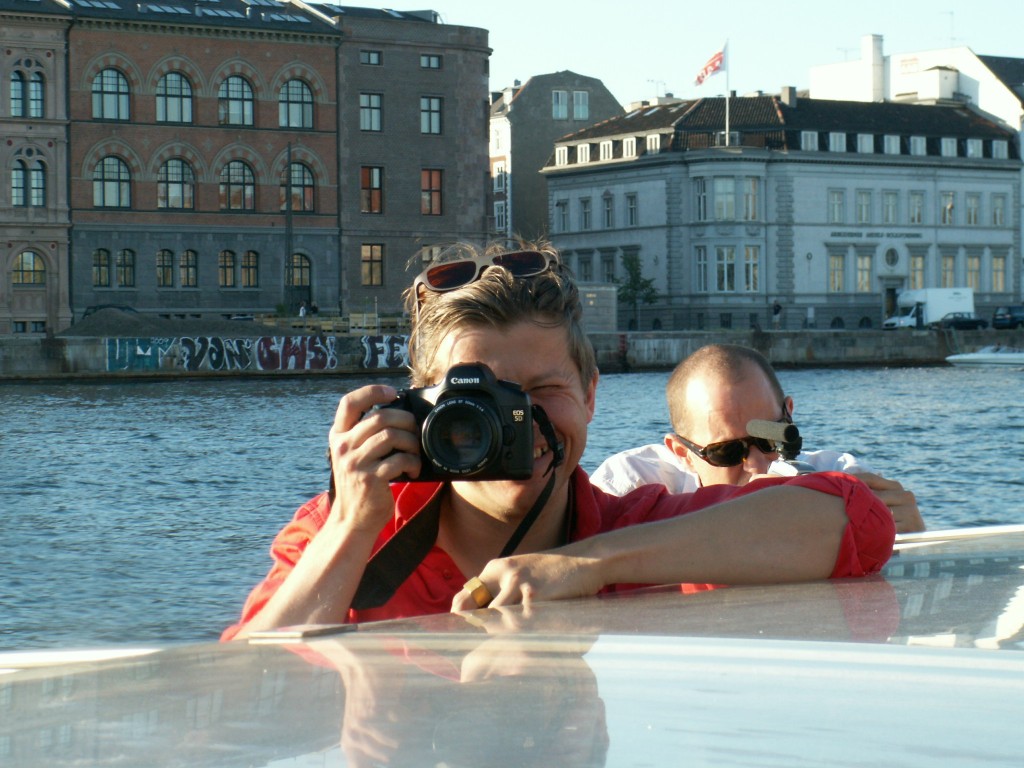
I guess there have been some photos taken at this boat-trip, which was nice and a good start to an evening at the Copenhagen beaches …
OK, now onto some of the talks on day one, I arrived early too:
Matt Webb started the talks, demanding more cultural invention – if only as a way to do more interesting things. Agree, we should stop “solving problems” and start “inventing culturally”, if this means going for the deep thinking. Needless to say that it all related to “design thinking” – and yes, “design has to invent, to create new ways of doing things, and to contribute to culture”.
David Weinberger, here I can say it with Peter’s words: “David Weinberger, who I always love to see talk, spoke about the web being a morally charged tool, and about optimism”. Yay, nice video, found via Peter:
Missed the talk by Matthias Müller-Prove, but went into Martin Jul’s session on what we can learn from Japan when they rebuilt after World War 2 – as they called on Deming for ideas, the session evolved into a collection of management principles (“Reboot your management“), some of whom are equally fitting our world of Enterprise 2.0.
It concerned Deming’s 14 principles for management, the humanistic, long-term thinking, keep learning, use the scientific method, and build from quality philosophy, that helped shape companies such as Toyota and Honda..
Researching the background of his work, it was interesting to see how the World-War 2 Training Within Industry principles played a big role in shaping his ideas and how its focus on operating from a basis of scarcity – such as saving material, time and labour to win the war faster, plays so well in an entrepreneurial setting and in cutting through the big-company trap of just throwing more money at problems.
Back from reboot, now onto blogging (again)
I am back from reboot 11, after basically two action-packed days on Thursday and Friday, and more socializing on the following weekend. Turned out to be a good idea to prolong the Copenhagen stay, not only was the weather very fine but got to meet some cool people too. And it sure helps the post-event wind down – happening when you have to retreat from the special reboot athmosphere into something more regular.
So I want to collect some takeaways based on me attending selected sessions (I was at nearly all of the keynotes) – yes, you only get a limited view of what was happening, but with sometimes five or six talks in parallel, and more longer-lasting side-projects running all of reboot time this is just the way it is. And of course it only is a part of my braindump mindmap …
My highlights included talks by (in no specific order) Matt Webb (check out his presentation), Lee Bryant and Bruce Sterling. That said, Bruce Sterling’s closing note was grappling, but some were supposing he’s making fun. I will leave that to your judgement, check out the video with him explaing his talk in short words:
Overall I learned a lot, not alone in the sessions but also in the many informal conversations happening around the conference. And while I am not feeling that much rebooted it inspired me to tackle some things anew, to refurbish some stalled mental investments and encouraged me to think about changing and tuning some of my approaches by giving me hints and inspiration (like “What does it mean to be an expert in social media?”, “How do I want to proceed with partnering, i.e. consulting in teams?” and more). Moreover, I decided to put more energy in my blogging once more, that is stepping up the frequency, together with being more flexible as to the ways it’s employed.
This was influenced in a way by Stowe‘s talk at reboot, which reminded me how lucky we are when we’ve got our own, self-designed venues to publish to the web. And while Twitter is cool (I think it’s way cooler than Facebook for that part), Friendfeed is great at managing (work)-lifestreams and other tools have their merits as well, blogging, that is putting up stuff with a permalink and means to comment, is still the difference between living a life of self-direction or dwelling in digital favelas. And I can still push all of what I want into the other feeds …